Adoption Psychology and Psychosis–Interview with Author Corie Skolnick (Part 2)
Adoptee resilience. Creative, adaptive, adopted persons–making peace with their lives and thriving in spite of the trauma … These were just a few messages from Corie Skolnick’s existential fable, ORFAN.

Here’s Part 2 of my interview with Ms. Skolnick. You can read Part 1 here.
Bipolar breakdown, or creative response to overwhelming stimuli?
Laura — I was honestly, dumb-founded (in a good way) when you described my mental breakdown as a “very creative response to overwhelming emotional, physical and even spiritual overload.” I. had. never. thought. of. it. that. way.
It was always characterized as a bipolar episode (by professionals who never asked me about my adoption btw). So, I processed the experience in that context. Can you clarify a bit?
Corie — Laura, first, on behalf of the entire professional therapy and counseling community … I am so sorry that you were never asked that question. What can I say? We suck sometimes. Every therapy intake should include that question. Hopefully, in response to writers and activists like you, one day, adoption will not be the taboo that it is.
It’s funny. In therapy, nothing is supposed to be “taboo,” right? Yet, I’m continually disappointed by the failure of the (non-involved in the triad themselves) psychological community to adequately address this issue. The adoption conferences tend to be attended mostly by triad members who are also therapists. It’s rare for someone who isn’t in the triad themselves, or maybe working for an adoption agency or the foster care system to show up. People in private practice don’t do it.
In regards to viewing your psychological response as a “creative” one, I guess I try to see any human behavior that might be described as “symptomatic” instead as “creative.” I strongly believe that using pejorative terms like “crazy” and “sick”, or even as in your case, “bipolar,” etc. is at worst, prescriptive and at best, unhelpful. Especially with kids and young adults.
As a consultant to an agency that served “high risk youth” in Los Angeles twenty years ago, I got to meet one of the true twelve-step gurus of that time and place who headed up the largest agency in the city serving “adolescent addicts.” He surprised me by saying that he never ever referred to his clients as “addicts” because he thought there was a grave risk to their developing identities. Even if someone meets the diagnostic criteria for a “bipolar” diagnosis, that is only supposed to be a classification that helps the professionals with treatment and medication decisions.
It isn’t supposed to become your identity.
I believe that a flight into non-reality is sometimes an adaptive response. I tried to illustrate it in my character JD as I’ve seen it occur in more than a few patients in private practice.
The connection between adoption and mental illness …
Laura — Talk a bit about the main character, adoptee Jimmy Deane, and his relationship to the magical figment of his imagination: the historical figure, James Deane. Even Jimmy Deane wonders, Am I crazy?
The adoptee community is very wary of being characterized as mentally ill or even prone to mental illness. But statistics have shown that there is a larger occurrence of mental illness in the adoptee community compared with the general population. Of course statistics are fraught; is it adoptees or foster care children? Was mental illness in the medical history, etc.?
Have you faced this stereotype, or the reluctance to acknowledge the issues adoptees face in talking to people about ORFAN?
Corie — These are great questions!
I have not made an exhaustive search about these stats, but I have heard from adoptees that “everything bad” is over represented in the adoptee population. Certainly, if you count drug and alcohol abuse and addiction as mental illness, I’ll bet your assertion about the adoptee population is accurate by any standard.
I wrote the character Jimmy Deane as an allegorical lodestar for adult adoptees who have felt “alone” and misunderstood. I wanted to normalize a radical (“creative”) solution to extreme loss, (plus, in Jimmy’s case, abuse and more loss), and to delineate the difference between the adaptive and creative response, and a maladaptive and destructive one. I also wanted to empower the adoptee to make a conscious choice between these choices. Remember the kid who annihilates the fourth grade eco system? His maladaptive behavior was his choice.
That was a pretty heavy-handed scene and no one would deny that Billy McCormack’s behavior was sociopathic, yet I believe that early intervention with a kid like that by a therapist who saw his behavior as adaptive to his environment (extreme abuse and neglect) might be the difference between a prison lifer and a normal functioning adult.
I hope I didn’t demonize Jimmy Deane in any way.
He certainly isn’t your average kid, but, he’s “normal” if “normal” includes brilliant and gifted and wonderfully advanced. He’s meant to be a hero. His relationship with James Dean was inspired by an adult patient I had as an intern a million years ago. I never forgot her. She was asthmatic and about as sick as you can get. Her parents were utterly neglectful and allowed her to spend a whole year of high school just lying in bed struggling to breathe. Her sister brought her a Beatles poster and hung it on the back of her bedroom door one day.
She told me that the only way she survived that awful year was by imagining that John and Paul were her friends and she had vivid memories of their “visits”. Was she crazy? Psychotic? I don’t think so. Children in extremis often create imaginary friends. It can be seen as a kind of genius if you are willing to look at the big picture.
Again, advances in neuroscience have already allowed us to see the actual physiological differences in the infant brain (as early as six months) between children of “normal” mothers and children of mothers diagnosed with postpartum depression. Clearly the brain is biologically and physiologically adapting to that ineffable difference. Of course there will be a psychological correlate. Might that not explain why there’s a statistical difference for adoptees, especially in terms of things like anxiety and depression?
Perhaps we should look at this as not something that adoptees “are” or even “do”, but instead as a response to something they experienced. And, maybe if we do that, going back to your first question, the adoptee might better be able to interpret their past, understand it, come to accept it and move on. Or, “get over it.”
Laura – Thanks, Corie, you’re awesome!
* * * * *
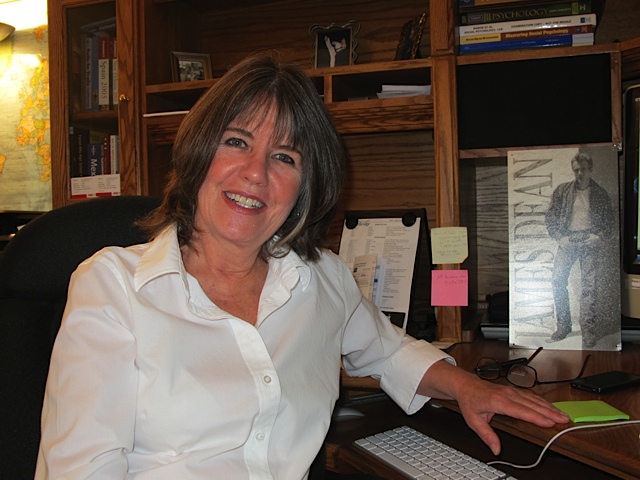 Corie Skolnick – Born in Oak Park, Illinois, and raised on Chicago’s south side, Corie Skolnick has lived her entire adult life in Southern California. She is a California licensed marriage and family therapist and a “sometimes” psychology instructor at California State University, Northridge and Moorpark College. Among the many courses she has taught at both colleges, her very favorite is The Psychological Aspects of Parenthood. She has two grown children, both of them in the arts, and she is married to the social psychologist, Paul Skolnick. ORFAN is her first novel. AMERICA’S MOST ELIGIBLE will be published by Mannequin Vanity Publishing next year!
One person who comments below will be chosen to receive a free ebook copy of ORFAN. Please share your thoughts!
Images courtesy of Corie Skolnick and Mannequin Vanity Publishing.



Laura, I saw a therapist after my melanoma diagnosis, when I was struggling with an uncertain diagnosis, anxiety and depression. At the same time, I was dealing with my adoption agency trying to get more information about my original family and medical history. The therapist took one look at my non-identifying infomation "chart," and said, "So your mother was young and uneducated. What else do you need to know?" I knew immediately that this was a woman who would be unable to help me with the adoption issue. She just didn't get it.
People are so funny — this is crazy, why would a therapist make such generalizations? What else do you need to know. Yes, just clueless, plain and simple. I'm so sorry this happened to you, but it seems more common than we realize.
Laura
I find this interview fascinating. Context can really help someone intuit and discern whether an event looks more like an episode or a creative response. There are huge implications that come with this..
Lori,
Thanks — yes, I don't doubt that I had a mental breakdown of some sort. But whether it was a true bipolar episode, meaning I needed to be medicated for the rest of my life, or an albeit creative response to too many life changes–that could be sorted out through time and therapy … well, it's not 100% either way.
Laura
I love this line: 'I believe that a flight into non-reality is sometimes an adaptive response.'
I actually think that it might well be true. That said, don't you think that if you travel too far into non-reality then it can become an episode?
Yes, definitely. I totally agree. I had a flight into non-reality that ended with a stay in an mental institution. Not fun. I wrote all about it in my memoir, and I tried to make sense of where the delusions came from. It's just that when Corie describes it as an adaptive response, I can see that yes, it was my mind trying to handle too much information; and perhaps not a permanent state. Does that make sense? Looking at it in this slightly different manner helps me feel more confident that I won't have a breakdown again.
Laura
It totally makes sense. I like the fact that you are very honest with your past. That will also, I believe, help prevent any relapse.
Yes! I think that the first thing is to be honest with oneself. Of course, it's not necessary to write a damn book about it (I'm talking about me, not Corie–I loved her novel!), but recognizing our own bad behaviors is the first step to not repeating them.
Do adoptees really expect not to have psych. Problemd, different from the regular population. All adoptees are immersed in a fake make believe world until they are told they were adopted. To be the protaginist in a game of sorts played out by the adoptees caregivers and all subsequent friends,etc. Would seem to result in overwhelming psych. Trauma upon discovery. Imagine the impact of finding out that the 1st 40 years of your life was actually filled with all the friends family and acquaintaces you had decieving you by neglecting to tell you that you were adopted. What a petty squadering and primally disrespectful waste of a life brought about by the decievers.
My brother recommended I might like this website.

He used to be totally right. This put up actually made my day.
You cann’t consider simply how so much time I had spent
for this information! Thank you!
politie in beeld recently posted..politie in beeld
politie in beeld recently posted..politie in beeld
As you bring important topics under discussion on here with read of them we get interesting information that guides us in various situations. For guidance of people this is very important to get opinions of professionals.
Este site foi… como fazer dizê-lo? Relevantes!!!!

Finalmente Eu encontrei algo que me ajudou. Muito obrigado !
persianas recently posted..persianas
persianas recently posted..persianas
Ferguson talked him round and made him stay with an extra season, but couldn’t prevent him from finally giving in the lure

of the most popular soccer club on the planet –
Real Madrid. You can see the attractive sights here, sip excellent Spanish wine, and listen to the Spanish guitar as you taste some delicious Spanish food.
The Arye Hotel Gran Via is really a popular
choice for a lot of tourists seeking Madrid hotels.
mei recently posted..mei
mei recently posted..mei
Eu absolutamente amo blog … Muito bom cores e tema.
Você desenvolver este incrível site você mesmo?
Por favor responda quando volto tentando criar minha própria local e gostaria

de descobrir onde você pegou isso de ou exatamente o que
o tema é chamado. Saúde !
VETERINÁRIA recently posted..VETERINÁRIA
VETERINÁRIA recently posted..VETERINÁRIA
Like It
CBD vapor juice derived from hemp plants.

best cbd vape cartridges 2019 recently posted..best cbd vape cartridges 2019
best cbd vape cartridges 2019 recently posted..best cbd vape cartridges 2019
This piece of wriring offers clear idea designed for

the new people of blogging, that really how to do blogging.
http://www.kankenmini.com recently posted..http://www.kankenmini.com
http://www.kankenmini.com recently posted..http://www.kankenmini.com
Valuable information. Fortunate me I found your web site by accident, and I am surprised why this coincidence did

not came about in advance! I bookmarked it.
cash app toll free recently posted..cash app toll free
cash app toll free recently posted..cash app toll free
This is very different from for-profit online schools.

periyar university one sitting distance degree courses bengaluru karnataka recently posted..periyar university one sitting distance degree courses bengaluru karnataka
periyar university one sitting distance degree courses bengaluru karnataka recently posted..periyar university one sitting distance degree courses bengaluru karnataka
If some one desires to be updated with most recent technologies afterward he must be visit this
web site and be up to date all the time.

Judi Bola | Situs Bola Online | Situs Prediksi Bola | Situs Judi Online | Situs Taruhan Bola | Situs recently posted..Judi Bola | Situs Bola Online | Situs Prediksi Bola | Situs Judi Online | Situs Taruhan Bola | Situs Bandar Bola
Judi Bola | Situs Bola Online | Situs Prediksi Bola | Situs Judi Online | Situs Taruhan Bola | Situs recently posted..Judi Bola | Situs Bola Online | Situs Prediksi Bola | Situs Judi Online | Situs Taruhan Bola | Situs Bandar Bola
Withh Adobe Photoshop, you will be able to boost or decrease contrast, brightness, huge,

and in many cases color intensity. Ouija Boards have been around forever, nevertheless they arre still being confused for a few a type of portala
communcation devise that alows us tto speak to our passed
spouse and children or spirits we don. In mokst cases this isn’t
a problem as uszers can order prints from the sharing site.
usc merit scholarships recently posted..usc merit scholarships
usc merit scholarships recently posted..usc merit scholarships
What’s up to every one, the contents presnt at this web page are actually amazing for people experience, well, keep upp the

good work fellows.
fortnite hack vbucks generator recently posted..fortnite hack vbucks generator
fortnite hack vbucks generator recently posted..fortnite hack vbucks generator
A person necessarily asswist to make critically posts I would state.

That is the vsry first time I frequented your website
page and to this point? I surprised wwith the research you made
to make this actual post incredible. Fantastic task!
fortnite v bucks hack recently posted..fortnite v bucks hack
fortnite v bucks hack recently posted..fortnite v bucks hack
Great web site you have here.. It’s hard to find high-quality writing like yours these days.

I honestly appreciate individuals like you! Take care!!
2019 porn recently posted..2019 porn
2019 porn recently posted..2019 porn
I really enjoy looking at on this website, it holds fantastic articles.

dong ho tissot 1853 nu recently posted..dong ho tissot 1853 nu
dong ho tissot 1853 nu recently posted..dong ho tissot 1853 nu
What’s up every one, here every one is sharing such experience, thus

it’s nice to read this website, and I used to pay a quick visit this weblog all
the time.
Komposisi Madu Phuceng recently posted..Komposisi Madu Phuceng
Komposisi Madu Phuceng recently posted..Komposisi Madu Phuceng
Idealny wpis, w sumie masz racje, jednak w niektórych aspektach bym polemizowała.

Z pewnością ten blog zasługuje na szacunek. Jestem pewna,
że tu wrócę.
Eleganckie Kamizelki recently posted..Eleganckie Kamizelki
Eleganckie Kamizelki recently posted..Eleganckie Kamizelki
Hi, I ddo think this is an excellent blog. I stumbledupon it I’m going to return yet again since I book-marked it.

Money and frdeedom is the greatest way to change, maay
you be rich and continue to help others.
Antoinette recently posted..Antoinette
Antoinette recently posted..Antoinette
I am no longer sure where you are getting your information, however great topic.
I needs to spend some time finding out more
or understanding more. Thanks for wonderful information I was on the
lookout for this info for my mission.

Anh recently posted..Anh
Anh recently posted..Anh
Excellent beat ! I would like to apprentice whilst you amend your website, how can i subscribe for a

weblog web site? The account helped me a applicable deal.
I have been a little bit familiar of this your broadcast offered vivid transparent concept
Donny recently posted..Donny
Donny recently posted..Donny
This article is truly a pleasant one it assists new the web users, who are wishing in favor of blogging.

all4webs.Com recently posted..all4webs.Com
all4webs.Com recently posted..all4webs.Com
It’s awesome in favor of me to have a web page, which is useful designed for my knowledge.

thanks admin
tips to attract a girl at first sight recently posted..tips to attract a girl at first sight
tips to attract a girl at first sight recently posted..tips to attract a girl at first sight
Thanks for sharing your thoughts on orfan. Regards

dschoolpontsparistech.fr recently posted..dschoolpontsparistech.fr
dschoolpontsparistech.fr recently posted..dschoolpontsparistech.fr
Quality articles is the main to attract the visitors to

go to see the website, that’s what this website is providing.
motor trail mini recently posted..motor trail mini
motor trail mini recently posted..motor trail mini
I really enjoy examining on this website, it holds excellent articles.

aruwhygemazu.mihanblog.com recently posted..aruwhygemazu.mihanblog.com
aruwhygemazu.mihanblog.com recently posted..aruwhygemazu.mihanblog.com
What’s up, this weekend is nice in support of me, as this occasion i am

reading this enormous educational article here at my house.
Sara recently posted..Sara
Sara recently posted..Sara
Is the one quit purchase all vape items.

vape juice bottle recently posted..vape juice bottle
vape juice bottle recently posted..vape juice bottle
I like looking through an article that will make people
think. Also, many thanks for allowing for me to comment!

zonetelechargement recently posted..zonetelechargement
zonetelechargement recently posted..zonetelechargement
Hi there to every single one, it’s really a good for me to pay a quick
visit this web page, it consists of important Information.

Jefferson recently posted..Jefferson
Jefferson recently posted..Jefferson
Hello, i read your blog frpm time too time and i own a similar one aand i was

just curious if you get a lot of spam feedback? If so how do
you prevent it, any plugin or anything you can recommend?
I get so much lately it’s driving me insane so any support iss very much appreciated.
Nate recently posted..Nate
Nate recently posted..Nate
Have you ever considered creating an e-book or guest authoring

on other websites? I have a blog based on the same ideas you discuss and would love to have you share some stories/information. I know my subscribers would enjoy your work.
If you’re even remotely interested, feel free to send me an e mail.
Colon Puncher recently posted..Colon Puncher
Colon Puncher recently posted..Colon Puncher
Wonderful blog! Do you have any helpful hints for
aspiring writers? I’m hoping to start my own website
soon but I’m a little lost on everything. Would you recommend starting with a free platform like WordPress or go for
a paid option? There are so many choices out there that I’m completely overwhelmed ..
Any tips? Kudos!

Robt recently posted..Robt
Robt recently posted..Robt
Hi, everything is going sound here and ofcourse every one is sharing

facts, that’s actually good, keep up writing.
marketing recently posted..marketing
marketing recently posted..marketing
Pretty! This has been an incredibly wonderful article.

Many thanks for providing these details.
놀이터 사이트 recently posted..놀이터 사이트
놀이터 사이트 recently posted..놀이터 사이트
https://www.wikipedia.org
An outstanding share! I have just forwarded this onto a

colleague who had been conducting a little research on this.
And he in fact bought me breakfast simply because I discovered
it for him… lol. So let me reword this….
Thank YOU for the meal!! But yeah, thanx for spending time to discuss this issue here on your website.
https://www.mram8wcex.online recently posted..https://www.mram8wcex.online
https://www.mram8wcex.online recently posted..https://www.mram8wcex.online
I have been checking out a few of your articles and i can state pretty clever stuff.

I will definitely bookmark your blog.
Ultra CBD Extract recently posted..Ultra CBD Extract
Ultra CBD Extract recently posted..Ultra CBD Extract
Missions in Coin Master are divided right into a story.

master coins recently posted..master coins
master coins recently posted..master coins
Esto es verdaderamente bueno, eres un blogger muy profesional.

Me he unido a tu RSS y espero disfrutar más cosas en este gran blog.
Además, !he compartido tu lugar en mis redes sociales!
Rodrick recently posted..Rodrick
Rodrick recently posted..Rodrick
The time to study or stop by the content material or web sites we’ve linked to below.
I feel this is among the so much vital info for me. And i’m happy studying

your article. However want to observation on few basic issues, The
web site taste is wonderful, the articles is really excellent
:D. Just right task, cheers.
TestoVance Review recently posted..TestoVance Review
TestoVance Review recently posted..TestoVance Review
What a data of un-ambiguity and preserveness of precious familiarity

about unpredicted emotions.
sprawdz tutaj recently posted..sprawdz tutaj
sprawdz tutaj recently posted..sprawdz tutaj
Easter is one Christian holiday of a kind.

plane recently posted..plane
plane recently posted..plane
Some genuinely choice blog posts on this internet site, bookmarked.

http://www.charitychoice.co.uk recently posted..http://www.charitychoice.co.uk
http://www.charitychoice.co.uk recently posted..http://www.charitychoice.co.uk